Renewable Infrastructure / Technical Atlas

Building the systems behind clean energy.

A comprehensive engineering archive detailing utility-scale wind generation, solar arrays, battery storage plants, high-voltage interconnectors, and modern grid balancing systems across Europe and global power corridors.

Offshore & Onshore Wind
Photovoltaic Arrays
Utility BESS Plants
HV Substations
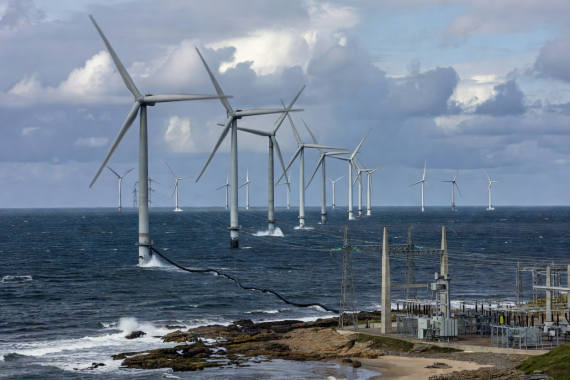
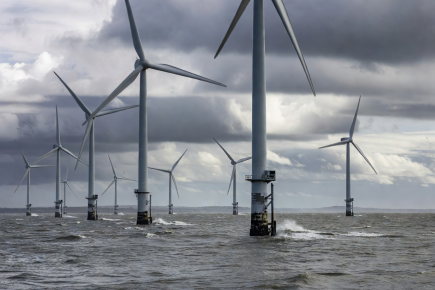
Offshore wind farm turbines rising above ocean water linked to coastal power infrastructure

From Generation to Grid Integration

Electricity produced by renewable assets follows an engineered sequence of power conversion, operational buffering, high-voltage transmission, and automated balancing before supplying industrial and municipal loads.

01

Generate

Kinetic wind capture via aerodynamic aerofoils or direct photon-to-electron excitation across silicon semiconductor wafers.

Low & Medium Voltage AC / DC
02

Convert

Solid-state string and central inverters convert variable DC or unregulated AC into frequency-synchronized grid-spec alternating current.

IGBT & SiC Inverter Bridges
03

Store

Lithium iron phosphate (LFP) containers and flow cells provide millisecond-fast synthetic inertia and multi-hour bulk energy shifting.

BESS 2h–8h Dispatch Buffers
04

Transmit

Step-up transformers raise potential to 110kV–400kV for low-loss bulk transport through overhead lattice corridors or subsea HVDC links.

HVAC & HVDC Interconnectors
05

Distribute

Distribution system operators step down voltages to 11kV–33kV and 400V, governed by SCADA telemetry and automated switchgear.

Primary & Secondary Substations

Core Infrastructure Domains

Explore the specialized technical layers that constitute modern multi-gigawatt renewable networks.

Offshore wind turbine generators installed with heavy monopile foundations in coastal waters
Generation Asset

Wind Farm Infrastructure

From 15 MW offshore direct-drive turbines seated on jacket foundations in the North Sea to rolling inland arrays, wind facilities require geotechnical stabilization, specialized heavy-lift assembly, and subsea inter-array cabling networks.

Capacity Factors42% – 58%
Array Voltage33kV / 66kV
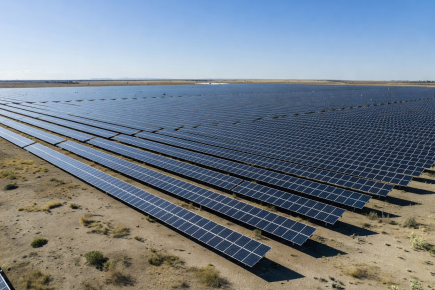
Utility-scale solar photovoltaic array with single-axis tracking tables in open terrain
Photovoltaics

Solar Energy Installations

Engineering multi-megawatt ground-mount installations demands meticulous consideration of tracking geometry, bifacial albedo gain, cable trenching, medium-voltage transformation skids, and agricultural land co-existence.

Module ArchitectureTOPCon / HJT Bifacial
System Voltage1500 V DC
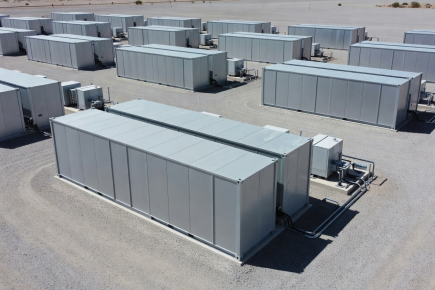
Modular utility-scale battery energy storage system enclosures with power conversion skids
Grid Flexibility

Battery Energy Storage

Utility BESS enclosures house rack-level liquid cooling loops, battery management electronics, fire deflagration abatement panels, and 4-quadrant bidirectional power conversion equipment capable of providing sub-second frequency reserves.

Storage ChemistriesLFP & Sodium-ion
Response Dynamic< 150 milliseconds
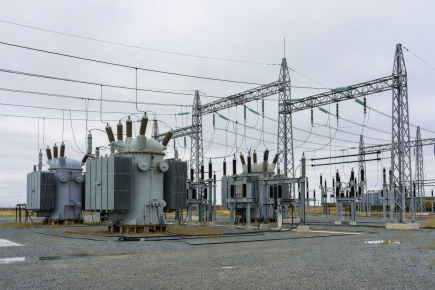
High-voltage electrical transmission substation with step-up autotransformers and switchyard gantry
Transmission & Control

Power Grid Technology

High-voltage substations, SF6-free gas-insulated switchgear (GIS), phase-shifting transformers, and synchronous condensers form the physical backbone that accommodates intermittent renewable injections without voltage collapse.

Voltage Classes110kV / 220kV / 400kV
InterconnectionHVDC VSC & HVAC
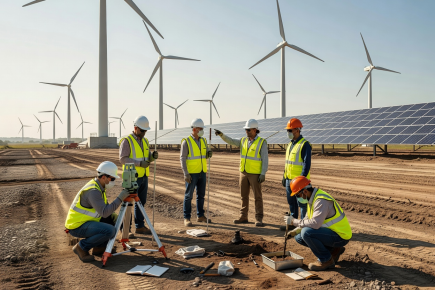
Civil and geotechnical engineers conducting surveying on a clean energy development site
Lifecycle Execution

Renewable Project Engineering

Successful asset delivery combines Front-End Engineering Design (FEED), grid queue interconnect modeling, geotechnical bore investigations, and procurement logistics to de-risk capital expenditures before civil ground-break.

Development Horizon3 – 7 Years
Design StandardsIEC 61400 & IEEE 1547

Compact Engineering Glossary

Precision terminology utilized by transmission planners, civil engineers, and utility operators.

Curtailment

Deliberate reduction in electrical output from renewable generation plants below potential capacity, enacted by system operators during transmission bottlenecks or negative wholesale pricing.

Synthetic Inertia

Fast-acting controlled power injection delivered by grid-forming inverters and battery systems, emulating the electro-mechanical rotational kinetic response of conventional thermal generator turbines.

Point of Common Coupling (PCC)

The physical electrical boundary where a private generation or storage facility interfaces with the public transmission or distribution network, governing metering and legal compliance boundaries.

Bifaciality Factor

The ratio of photovoltaic efficiency on the rear surface of a panel relative to its front surface, determining supplementary energy yield reflected from terrain albedo surfaces.

Infrastructure Dialogues

Consult the Engineering Reference Team

Have technical inquiries regarding wind wake simulations, battery degradation profiles, or high-voltage interconnection parameters? Connect with our documentation authors.

Engineering advisory workspace and technical consultation facility